Featured

Functions and areas related to hauliers

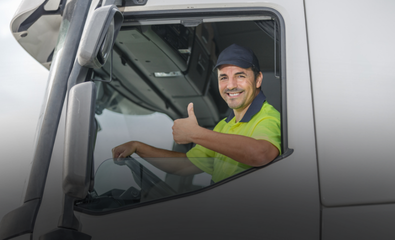
Duties of a haulier include loading and unloading cargo, compliance with established routes, monitoring vehicle condition, delivery note processing, and basic maintenance.

Related areas: logistics, distribution, warehousing, international trade, courier services, and road transport.

Free tool

Do you need to create a CV for haulier jobs and don’t know how to start?

Use our Professional CV Builder. Our AI improves your descriptions, responsibilities and professional summary so you won’t be discarded in recruitment processes.

Professional templates
ATS optimised
Download as PDF
CREATE FREE PROFESSIONAL CV
You need a CV image

Information on working as a haulier

What is needed to be a haulier?

Offers usually require a driving license corresponding to the vehicle type (usually Category C or C+E), previous experience in delivery or routes, and basic knowledge of mechanics or transport document management. Responsibility and punctuality are also highly valued.

Average salary of a haulier

The salary for a haulier ranges between €1,400 and €2,000 gross per month, depending on the type of route (national or international), the company, and supplements for per diems or night shifts. In international transport, salaries can exceed €2,500.

Advantages of working as a haulier

Benefits include autonomy at work, the possibility of traveling and seeing new places, and a high level of employability in a sector with constant demand. It is also an option for those who enjoy working on the road and do not require constant supervision.

Do you need haulier jobs workers for your company?

At Jobfie we search, screen and select the most compatible profiles for your job offer. We want to help you build the best team for your company.

FIND WORKERS
Looking for workers image

Frequently asked questions about haulier jobs

What certificates are necessary to work as a haulier?

In addition to a driving license, a CPC (Certificate of Professional Competence) is typically required, and in some cases, an ADR for dangerous goods transport. A digital tachograph and road safety training may also be necessary.

How can one find a job as a haulier?

The main routes are specialized job portals, logistics companies, recruitment agencies (ETTs), and platforms like Jobfie. Word of mouth and direct registration in transport sector job banks also work well.

What skills are valued in the transport field?

Beyond driving well, time management, planning capacity, incident resolution, customer orientation, and stress resistance are valued. Communication skills and knowledge of routes and geography are also important.

Suggestions